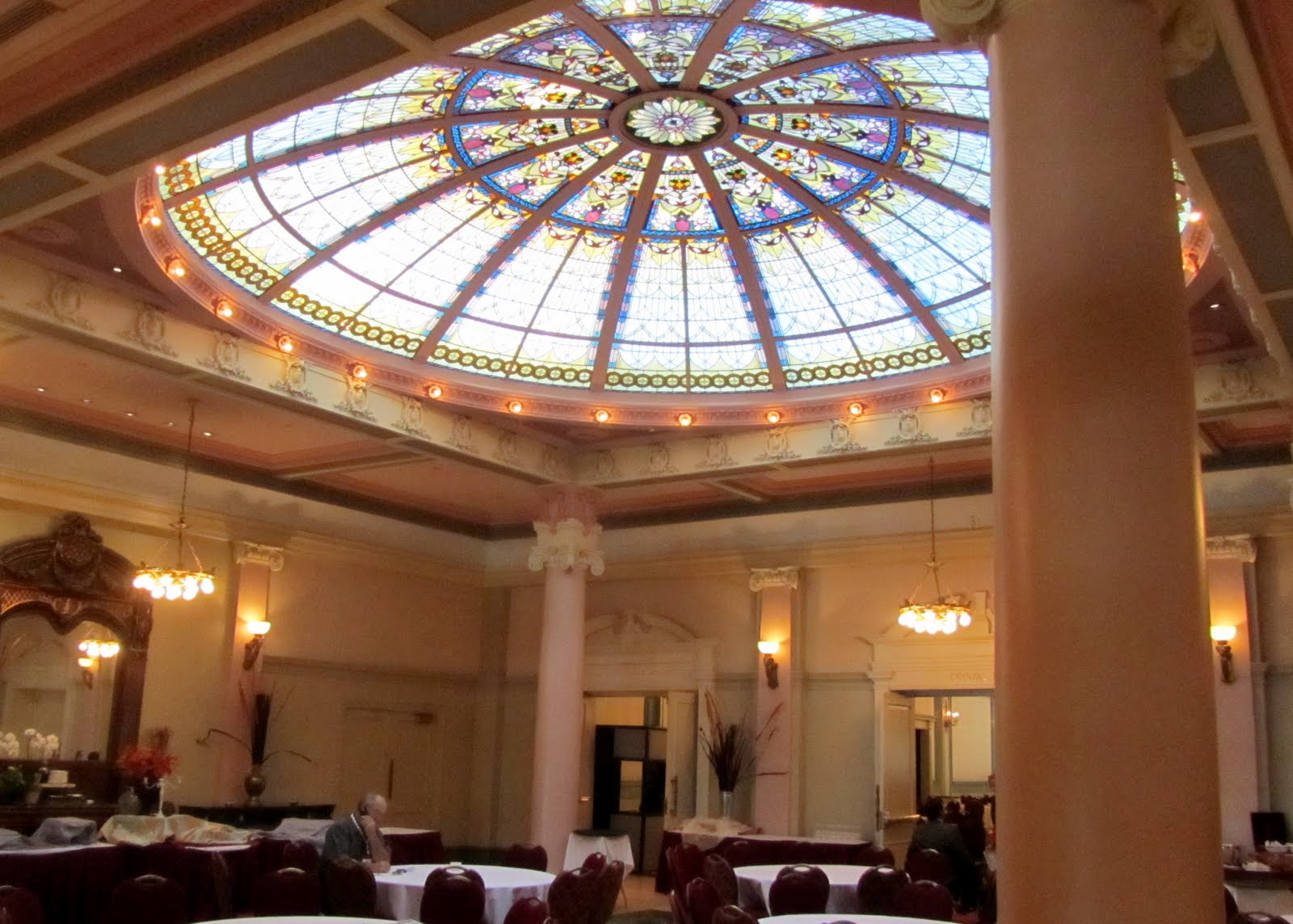
This is where they used to hang people in the old days.


Frosty mornings yielded to warm and sunny afternoons for a few days in Victoria this week, taking us all by surprise. But a pleasant surprise, and a good time to take a walk along the sidestreets and back alleys.
I've never delved into the history of the city too much, but it's very obvious that at the end of the 19th century it was a budding metropolis. It was the capitol of a huge province, it was a bustling seaport, and the future was unlimited. When the railways came to Vancouver and Seattle, and steamships took over from sailing vessels, it became a backwater. You can tell just by traversing the downtown. The 20th century has come between our time and those glory days, over a hundred years ago and in that time the downtown still has approximately the same boundaries. That would be Chinatown to the north, the Empress to the south and Blanchard, or perhaps Quadra to the east. That just makes it very walkable.
Most of the buildings in the downtown were erected between the 1880's and the early 20th century so they incorporated the materials and techniques of that era. They were put up one brick at a time. There's something very pleasing about the earthen tones of fired clay brick, and the necessities of its capabilities meant that the graceful lines of arches, corbeling, weren't mere decorative flourishes but practical ways of adding strength. Gravity was used to create space and airiness. And this all comes out as beauty.
That technology also demanded craftsmanship and the kind of knowledge and lore that was passed along from one generation of mason to the next. The architect has very little to do with it. All he did was draw the conceptual lines. It was up to the craftsmen to figure out how to turn the concept into reality.
By contrast, while it may be practical and durable, there is nothing that can be done to make concrete beautiful. That may not be the worst thing about it from an aesthetic standpoint. The worst thing is that an architect can get away with just about anything. No longer limited by the constraints of gravity and brick and stone masonry's lack of tensile strength, there are few limits to his fevered imaginings. The craftsman is pretty well gone now, replaced by the engineer. It's now the engineer who has to translate a drawing into a wall. Oh, it takes experienced carpenters to build formwork but they've been relegated to bull labour. And it doesn't take long to train a new one. That's a good thing because we do not like to go to the expense of training the workforce. For years we've gotten away with outsourcing it to other countries. We raid other countries for the talent they thought they had developed for their own benefit.
When I was in the trade Europe was the primary source, but today it seems to be Mexico. It's done differently now, too. The Mexican worker doesn't come up here and apply at the construction site. He is part of a contractors crew that hires itself out to whatever project is willing to pay the freight. The last job I worked at had an Albanian crew to install the windows. It's not that good of a deal to be a construction worker anyway. True, the money is good... but construction has always been a boom and bust sort of business. There will be periods when it isn't possible to take on all the work available. Money comes in (and gets taxed away) until some financial crisis comes along, and then it all stops for a few years. By the time things get going again many of the experienced workers of the last boom have gotten out of the trade, retired, or gotten too beat up to go back. Construction work takes a heavy toll on the body. It's great when you're twenty-five, not so great when you're forty-five.
Maybe it's partly because I used to be a bricklayer that I enjoy seeing the brick buildings. I can't help think of the men who laboured on them as I pass my eyes over their work of so long ago.
While I never built a boat, it was something I always wanted to do. And there's one thing about a boat. It doesn't matter so much what the material, the ocean makes demands that never change. For most working watermen the age of sail has been over with for a long time. First came steam and paddle wheels, then the propeller, then came diesel and gasoline. So it's no longer necessary to have to balance wind against current as much as before. Just hit the ignition and plow through the waves. But boats still have the same shapes as ever, they still have to stay afloat, and so even new ships are beautiful. I hope I'll be able to get out and watch the Point Hope shipyard relaunch the Quadra Queen II.